
Yesterday, the UN Commission on Human Rights held it's last session -- ever.
A comment left on a previous post of mine made me feel I needed to say a few words about what the Commission had done for human rights in Iran.
So last night I embarked on a long and tediously chronological eulogy but subsequently decided to refrain from publishing what would have been quite boring.
In reflecting upon the Commission, some might ask whether there had been any difference on the ground after having had the mandate of a Special Representative who reported on human rights violations in Iran for 18 years, and then losing it 4 years ago. Then, a number of other Special Rapporteurs also visited Iran and subsequently reported. Have these made any change?
Whatever response we will come to will only be subjective, because any real assessment will only be possible in retrospect. However, perhaps we may get some insight by listening to the Latin American countries expressing how the attention of the Commission made a difference at a time when they were engulfed in turmoil, countries like Argentina, Chile, Guatemala, Peru...
Then we need to ask ourselves a number of questions: if there had not been, year after year, a report by the UN, what would have given accurate information on the situation within the borders of the IRI? The report of the State Department? Some could argue that it is biased... Those of Amnesty or Human Rights Watch? They are more subject oriented and do not give a yearly and comprehensive view of the situation, and the entries for Iran on their annual reports are far too limited.
Furthermore, most of the thematic Rapporteurs that visited the country -- and all gave pretty damming reports -- could not be accused of not understanding "cultural differences" (or was it "cultural particularism", Mr. Khatami?):
1995: Freedom of religion, Abdelfattah Amor, a Tunisian and a Muslim
1996: Freedom of the press, Abid Hussain, an Indian and a Muslim
2003: Arbitrary Detention, Louis Joinet and Leïla Zerrougui, the latter an Algerian and a Muslim
2005: Violence against women, Yakin Ertürk, a Turk and a Muslim
2005: Adequate Housing (and confiscation of properties), Miloon Kothari, an Indian
I also need to highlight a couple of events: those among us who were already around remember the three visits of Reynaldo Galindo Pohl to Iran in 1990-1991, his visit of Evin, his waiting inside UNDP while witnesses were not being allowed to approach the premises...
And had it not been for the visit of Louis Joinet and Leïla Zerrougui, who would have ever officially recorded the existence, thereafter never challenged, of "sector 209" in Evin -- what they called the "prison within the prison" -- and of "prison 59" in the Vali-Asr.
Now some might think "and so what? All this for what result?" I humbly submit that the more publicity is given to the information, the more protection we shed on the victims. The vast majority of those whose names have been in the public are still alive (and many of them are even free) and those who unjustly died often did so before the world heard about their fate.
Tuesday, March 28, 2006


Wednesday, March 22, 2006
Preach and practice
On Monday, Mr. Javad Zarif, the Ambassador and Permanent Representative of the Islamic Republic of Iran to the United Nations wrote a letter to the Secretary General of the UN, Mr. Kofi Anan, to protest the US threats against Iran.
In the meantime, the UN Special Rapporteur on Freedom of Religion or Belief, Ms. Asma Jahangir, was issuing a statement indicating that she was “highly concerned by information she has received concerning the treatment of members of the Bahá'í community in Iran.”
It seems that a number of branches of our government, including the Ministry of Information, the Pasdarans and the Police have been requested to identify all the Baha’is…
She then goes on to say that she is “apprehensive”. Well, rightly so, I would say. History has unfortunately told us that identification of a group of people, particularly of those belonging to one religion, by a government, does not augur well for their fate.
Surely, Iran’s chief representative who has just criticized the US for its “contempt” of the UN will take it upon himself to ensure that the requests of the Special Rapporteur calling upon his country “to refrain from categorizing individuals according to their religion and to ensure that members of all religious minorities are free to hold and practise their religious beliefs, without discrimination or fear" will be implemented.
In the meantime, the UN Special Rapporteur on Freedom of Religion or Belief, Ms. Asma Jahangir, was issuing a statement indicating that she was “highly concerned by information she has received concerning the treatment of members of the Bahá'í community in Iran.”
It seems that a number of branches of our government, including the Ministry of Information, the Pasdarans and the Police have been requested to identify all the Baha’is…
She then goes on to say that she is “apprehensive”. Well, rightly so, I would say. History has unfortunately told us that identification of a group of people, particularly of those belonging to one religion, by a government, does not augur well for their fate.
Surely, Iran’s chief representative who has just criticized the US for its “contempt” of the UN will take it upon himself to ensure that the requests of the Special Rapporteur calling upon his country “to refrain from categorizing individuals according to their religion and to ensure that members of all religious minorities are free to hold and practise their religious beliefs, without discrimination or fear" will be implemented.
Sunday, March 19, 2006
Anyone feeling betrayed?
The BBC has these “your perspective” entries. I think they should have one on what people feel about the US and Iran holding talks about Iraq.
How do the supporters of a regime change in Iran feel? And those who rally in front of Mr. Ahmadinejad shouting “death to America”?
Just a thought.
And a question: if it is to be about Iraq, why is it that it was Mr. Larijani who made the first announcement?
How do the supporters of a regime change in Iran feel? And those who rally in front of Mr. Ahmadinejad shouting “death to America”?
Just a thought.
And a question: if it is to be about Iraq, why is it that it was Mr. Larijani who made the first announcement?
Thursday, March 16, 2006
A Council is born
Yesterday, the UN General Assembly adopted a resolution creating a Human Rights Council to replace the much recriminated Commission on Human Rights. The text was adopted with 170 countries in favour, 4 against (US, Israel, Marshall Islands and Palau) and 3 abstentions (Iran, Belarus and Venezuela).
Much can be said about the reasons behind a “no” vote on the part of the United States. However, the reason officially put forward was that the text was not strong enough.
Now let’s look at the distinguished delegate from the Islamic Republic of Iran:
She said that “country-specific resolutions should not be approved” and was concerned that “the suspension of the rights of membership in the Council, … , might be used as a pretext by certain States, in their politically motivated attempts to pursue their national interests.”
Looks as if Iran is taking the text personally…
The full debate can be found here.
Much can be said about the reasons behind a “no” vote on the part of the United States. However, the reason officially put forward was that the text was not strong enough.
Now let’s look at the distinguished delegate from the Islamic Republic of Iran:
She said that “country-specific resolutions should not be approved” and was concerned that “the suspension of the rights of membership in the Council, … , might be used as a pretext by certain States, in their politically motivated attempts to pursue their national interests.”
Looks as if Iran is taking the text personally…
The full debate can be found here.
Tuesday, March 14, 2006
The UN and the victims
Yesterday a group of victims of human rights abuses and relatives of victims gathered at the Place des Nations in Geneva to request a condemnation of Iran by the United Nations machinery and the appointment of a Special Rapporteur to monitor the human rights situation in that country.
They came from various parts of Europe, travelled painstakingly, stood there in the bitter cold of winter in Switzerland, and spoke … who was there to listen?
Of course, some of us know that this is not the way to have your voice heard at the UN, but my heart goes out to them.
Perhaps, the voices of victims like these are what the various governments negotiating on the establishment of a new Human Rights Council should keep in mind first and foremost, and also what should haunt those who exert their utmost to ensure that such a Council will never condemn them.
They came from various parts of Europe, travelled painstakingly, stood there in the bitter cold of winter in Switzerland, and spoke … who was there to listen?
Of course, some of us know that this is not the way to have your voice heard at the UN, but my heart goes out to them.
Perhaps, the voices of victims like these are what the various governments negotiating on the establishment of a new Human Rights Council should keep in mind first and foremost, and also what should haunt those who exert their utmost to ensure that such a Council will never condemn them.
Sunday, March 12, 2006
Interview with an Ayatollah
So the week-long report by the British Channel 4 in Iran has ended, and thanks to the fact that they had contacted Iranian bloggers from the outset, I watched it regularly, with some regret at first: it was a little light and never seemed to get to the real issues.
This until they went to Qom and did a programme on the power of the hozeh -- the clergy. Although the intro of Jon Snow was a little less “correct”, as he started by saying: “Iran is, in many ways an extremely controlling state. We have to ask permission for virtually everything we have to film. It's only the severity of the nuclear crisis that's persuaded the authorities here to open up as much as they have, allowing us to talk to ordinary people and those who run Iran.” I still found it very unnerving to watch the live interview of Ayatollah Mahdi Hadavi Tehrani. Particularly how pleased of himself he was, and of being on British TV!
(All day today as I read and listened to the various news about Milosevic’s death, I felt I could relate to the sense of helplessness of the victims -- that was what made me so uneasy while watching the interview.)
But ask an Iranian cleric about human rights or other religions or beliefs, and he will unfailingly give himself away: firstly, Mr. Hadavi firmly stated that human rights are implemented throughout the country, and then, when asked about the Sufis, he initially said they had done things against the regime, and then continued by declaring that it was not the government but the people who attacked them.
Earlier on he had clearly denied the fact that Iran would want to use nuclear weapons, but if this statement were to be compared to the two earlier ones, then how could one feel reassured?
This until they went to Qom and did a programme on the power of the hozeh -- the clergy. Although the intro of Jon Snow was a little less “correct”, as he started by saying: “Iran is, in many ways an extremely controlling state. We have to ask permission for virtually everything we have to film. It's only the severity of the nuclear crisis that's persuaded the authorities here to open up as much as they have, allowing us to talk to ordinary people and those who run Iran.” I still found it very unnerving to watch the live interview of Ayatollah Mahdi Hadavi Tehrani. Particularly how pleased of himself he was, and of being on British TV!
(All day today as I read and listened to the various news about Milosevic’s death, I felt I could relate to the sense of helplessness of the victims -- that was what made me so uneasy while watching the interview.)
But ask an Iranian cleric about human rights or other religions or beliefs, and he will unfailingly give himself away: firstly, Mr. Hadavi firmly stated that human rights are implemented throughout the country, and then, when asked about the Sufis, he initially said they had done things against the regime, and then continued by declaring that it was not the government but the people who attacked them.
Earlier on he had clearly denied the fact that Iran would want to use nuclear weapons, but if this statement were to be compared to the two earlier ones, then how could one feel reassured?
Thursday, March 09, 2006
In search...
We have entered a tunnel, a very dark tunnel.
These past days, all the foreign press talked about Iran, there were Op/Eds and analysis all over: The NY Times and Washington Post, Le Monde and Le Figaro, the Times, the Frankfurter, even the Corriere, to mention a few. But not one of them was able to make an innovative analysis, let alone offer the glimpse of a solution. Well, the International Crisis Group did, but frankly Derakhshan's proposal is more imaginative. I expected more from Chris Patten, but then one of their experts on the team was Tim Guldiman, known for being a proponent of compromises with Iran...
And then today I found a very interesting analysis by a Frenchman, Frédéric Tellier (from the Institut de la Recherche Stratégique) published in a Swiss newspaper, of all places! The article, entitled "L'Iran joue la carte nationaliste, qui trouve un écho dans la population" can unfortunately only be found through a search on the site of the paper, but basically, the author makes three points:
- The government in place is using Iranian nationalism (and the figure of Dr. Mossadegh) to rally a disillusioned and otherwise pro-american youth behind it. This strategy was initiated during Mr. Khatami's presidency.
- Mr. Ahmadinejad is very vocal and on the front line, but is not a main decision maker. His election was a very stategic choice by Ayatollah Khamenei, luring the West into thinking that the situation we are in now is due to Ahmadinejad's radicalism. The latter might even be used as a "fuse" in the event of a failure, to be then replaced by Rafsanjani or Khatami.
- The US military option is not impossible. Iran remains one of the main supporter of terrorism, with increasing outreach (all the way to sub-saharan Africa). Therefore a nuclear Iran is unacceptable to the West. The situation in Iraq would not be a enough of a hinderence for the US and airborne hits could be effective.
These past days, all the foreign press talked about Iran, there were Op/Eds and analysis all over: The NY Times and Washington Post, Le Monde and Le Figaro, the Times, the Frankfurter, even the Corriere, to mention a few. But not one of them was able to make an innovative analysis, let alone offer the glimpse of a solution. Well, the International Crisis Group did, but frankly Derakhshan's proposal is more imaginative. I expected more from Chris Patten, but then one of their experts on the team was Tim Guldiman, known for being a proponent of compromises with Iran...
And then today I found a very interesting analysis by a Frenchman, Frédéric Tellier (from the Institut de la Recherche Stratégique) published in a Swiss newspaper, of all places! The article, entitled "L'Iran joue la carte nationaliste, qui trouve un écho dans la population" can unfortunately only be found through a search on the site of the paper, but basically, the author makes three points:
- The government in place is using Iranian nationalism (and the figure of Dr. Mossadegh) to rally a disillusioned and otherwise pro-american youth behind it. This strategy was initiated during Mr. Khatami's presidency.
- Mr. Ahmadinejad is very vocal and on the front line, but is not a main decision maker. His election was a very stategic choice by Ayatollah Khamenei, luring the West into thinking that the situation we are in now is due to Ahmadinejad's radicalism. The latter might even be used as a "fuse" in the event of a failure, to be then replaced by Rafsanjani or Khatami.
- The US military option is not impossible. Iran remains one of the main supporter of terrorism, with increasing outreach (all the way to sub-saharan Africa). Therefore a nuclear Iran is unacceptable to the West. The situation in Iraq would not be a enough of a hinderence for the US and airborne hits could be effective.
Monday, March 06, 2006
Paranoia
… thanks to the government of the IRI:
A few hours ago, I checked my blog and could not republish. I would get an error message. So, I tried viewing my blog and this is why I got on the web page:

After trying a couple of other blogs and a few times my own again, guess what was the thought that came to my mind?…
“They” have blocked my site!
And then I asked myself: Is it because of my latest post re what BBC did not dare to put in writing? Does that really makes me worse than the other Iranian blogs? Perhaps it’s those Baha’i photos…
While all the other American, European, etc. bloggers just asked themselves what went technically wrong – and rightly so, it was a blogger.com failure and things were fixed a couple of hours later.
A few hours ago, I checked my blog and could not republish. I would get an error message. So, I tried viewing my blog and this is why I got on the web page:
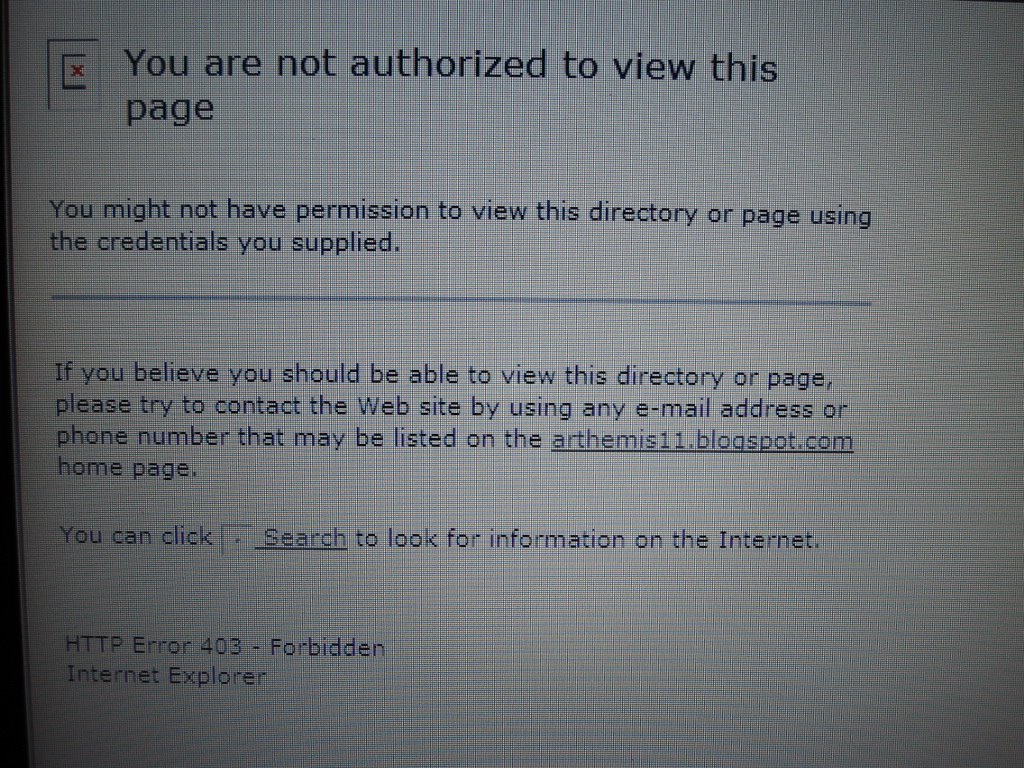
After trying a couple of other blogs and a few times my own again, guess what was the thought that came to my mind?…
“They” have blocked my site!
And then I asked myself: Is it because of my latest post re what BBC did not dare to put in writing? Does that really makes me worse than the other Iranian blogs? Perhaps it’s those Baha’i photos…
While all the other American, European, etc. bloggers just asked themselves what went technically wrong – and rightly so, it was a blogger.com failure and things were fixed a couple of hours later.
Sunday, March 05, 2006
Women, ladies and girls
There has been some talk about women’s rights in Iran lately, whether it was concerning the access to the Iran/Costa Rica match or our first lady accompanying Mr. Ahmadinejad to Malaysia, or on the subject of domestic violence.
Today, the BBC had on its site a piece by its correspondent on how increasingly difficult it was to be a female journalist in Iran. Interestingly, however, there is just one bit of the audio that does not appear in the text on the page, although to me it is perhaps the most revealing, so I have transcribed it:
“Every time I go to the weekly foreign ministry briefing the security officials reprimand me for some tuft of hair showing, then there is one public relations official in the foreign ministry who delights in leaving my name off the list of reporters who want to ask a question during the news conferences. His clear enjoyment of humiliating me borders on some perverted kind of flirtation. He clearly gets a kick out of it. And when I once accused him of having a problem with me because I was a woman, he just laughed as if I’d complimented him. In retrospect, I thought it was quite amazing that I could tell an official he was a male chauvinist, and he wasn’t at all offended.”
Today, the BBC had on its site a piece by its correspondent on how increasingly difficult it was to be a female journalist in Iran. Interestingly, however, there is just one bit of the audio that does not appear in the text on the page, although to me it is perhaps the most revealing, so I have transcribed it:
“Every time I go to the weekly foreign ministry briefing the security officials reprimand me for some tuft of hair showing, then there is one public relations official in the foreign ministry who delights in leaving my name off the list of reporters who want to ask a question during the news conferences. His clear enjoyment of humiliating me borders on some perverted kind of flirtation. He clearly gets a kick out of it. And when I once accused him of having a problem with me because I was a woman, he just laughed as if I’d complimented him. In retrospect, I thought it was quite amazing that I could tell an official he was a male chauvinist, and he wasn’t at all offended.”
Thursday, March 02, 2006
Incorrigible...
I had promised myself that I would give religion/minorities et al. a break but there he was in the news this morning! And I could not but post it. Mr. Khatami, with your smile and your Dialogue among Civilizations, just remind me which position you held when the 13 Jews were tried in Shiraz?
Tuesday, February 28, 2006
Karroubi's (recent) letter
A few days ago Mehdi Karroubi wrote an (open?) letter to the Marjaiyat, the centres of emulations, in Qom. On freedom of religion or belief...
Mr. Karroubi explicitly refers to the attack on the Sufis in Qom. However, if one reads further, it is a broader encompassing text, where he appeals to the religious leaders in Qom to protect, in conformity with the lofty principles contained in Islam, the rights of all human beings – “even those who hold beliefs that we don’t agree with"
(دفاع از حقوق همه انسانها حتی كسانی كه عقايد ايشان را نمیپسنديم)
... and hints to the fact that perhaps up to now they have rather supported those who only wear the garments of friendship.
For those who can read Persian, I recommend the whole article in Iranema.
Hmmm... probably more reason for some to feel that they have done the right thing in censoring his TV... I wonder how Iran would look like if he had come second in the first round of the elections...
Mr. Karroubi explicitly refers to the attack on the Sufis in Qom. However, if one reads further, it is a broader encompassing text, where he appeals to the religious leaders in Qom to protect, in conformity with the lofty principles contained in Islam, the rights of all human beings – “even those who hold beliefs that we don’t agree with"
(دفاع از حقوق همه انسانها حتی كسانی كه عقايد ايشان را نمیپسنديم)
... and hints to the fact that perhaps up to now they have rather supported those who only wear the garments of friendship.
For those who can read Persian, I recommend the whole article in Iranema.
Hmmm... probably more reason for some to feel that they have done the right thing in censoring his TV... I wonder how Iran would look like if he had come second in the first round of the elections...
Sunday, February 26, 2006
To google or not to google
I have been thinking about this for some days now, and yet, frankly, I couldn't be bothered with the thought of having to move my newly created blog to some other site, find a new name, work on the design, etc. Then also change my email address, and go where? to Yahoo, not a better choice!
Apathy on one side and a sense of helplessness on the other. The remaining dilema, however, is how can we move our advocacy for human rights beyond mere words. It reminds me of a leftist old lady who used to boycott South African oranges during Apartheid, and I remember asking myself whether this would have any effect beyond depriving her of her daily dosage of needed vitamin C.
I am still convinced that google does not need my blog or my email address, and yet, I feel I am letting the Chinese down, as if I forgot about Ganji or Soltani or let the Basiji beat-up some poor guy next door and turn away, because he was a little different, after all...
Apathy on one side and a sense of helplessness on the other. The remaining dilema, however, is how can we move our advocacy for human rights beyond mere words. It reminds me of a leftist old lady who used to boycott South African oranges during Apartheid, and I remember asking myself whether this would have any effect beyond depriving her of her daily dosage of needed vitamin C.
I am still convinced that google does not need my blog or my email address, and yet, I feel I am letting the Chinese down, as if I forgot about Ganji or Soltani or let the Basiji beat-up some poor guy next door and turn away, because he was a little different, after all...
Thursday, February 23, 2006
Holy Places
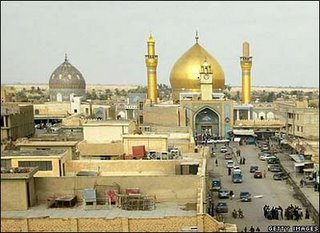
Samarra, sacred tombs of Imam Ali al-Hadi and Imam al-Hasan al-Askari:

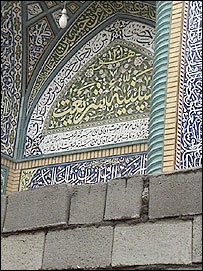
Qom, Hoseynieh of the Sufis:
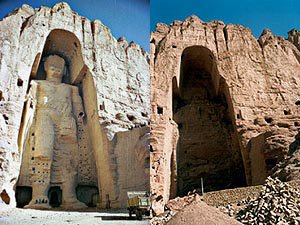
Bamiyan, Statues of the Buddha:
Shiraz, House of the Bab:
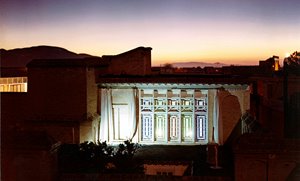


Qom, Hoseynieh of the Sufis:

Bamiyan, Statues of the Buddha:

Shiraz, House of the Bab:


Tuesday, February 21, 2006
EP
Speaking in Brussels at the European Parliament yesterday, Manoochehr Mottaki at one point said: "Let politicians not enter the domain of clerics". This says it all doesn't it? Particularly coming from the Foreign Minister of a country where clerics reside in the domain of politicians.
The rest is all the same, self-contradicting rhetoric and soft-spoken distortions of reality. (I had written a long post but realized it was a sour re-hash of the press release...)
The rest is all the same, self-contradicting rhetoric and soft-spoken distortions of reality. (I had written a long post but realized it was a sour re-hash of the press release...)
Friday, February 17, 2006
Human or nuclear rights
Amnesty released a report on Iran at mid-day yesterday. In the opening paragraph its press release stated: "The current standoff regarding the country's nuclear programme must not distract either the government or the international community from addressing the country's long-standing human rights problems." What about the media? I watched all day yesterday, for a Reuters, perhaps an AFP ... and again today, no sign of it... Until -- finally -- it appeared on Radio Farda (I know, again, sorry, but hey…) and later on Payvand.
A few weeks ago, Mr. Ahmadinejad said (and unfortunately I am paraphrasing because I can no longer find the link) "If we solve the nuclear issue then they will come after our human rights situation.”
It’s been a while since Amnesty has written a full report on Iran. And as must be the case for all those concerned about the situation of human rights in a given country, I guess, I wish there would be more coverage about it. But the human rights discourse is no longer fashionable. We all know why too, and I will come back to this soon.
I just need to add one more point on the report: although it starts with a clear indication that the situation has worsened since the election of the new President, many of the abuses reported in there were commited during Mr. Khatami’s tenure...
A few weeks ago, Mr. Ahmadinejad said (and unfortunately I am paraphrasing because I can no longer find the link) "If we solve the nuclear issue then they will come after our human rights situation.”
It’s been a while since Amnesty has written a full report on Iran. And as must be the case for all those concerned about the situation of human rights in a given country, I guess, I wish there would be more coverage about it. But the human rights discourse is no longer fashionable. We all know why too, and I will come back to this soon.
I just need to add one more point on the report: although it starts with a clear indication that the situation has worsened since the election of the new President, many of the abuses reported in there were commited during Mr. Khatami’s tenure...
Wednesday, February 15, 2006
Out of order
I don't regularly check Radio Farda's website, but thanks to E there is now one programme that I make sure I listen to regularly: Kharej az Dastur. It never ceases to make me laugh. Last week's, the one with Larijani's photo, is fantastic.
Friday, February 10, 2006
Shajarian v/ Touré
Weren't we all excited when Mohammad Reza Shajarian (together with Hossein Alizadeh, Kayhan Kalhor and Homayoun Shajarian) was nominated for the Grammy awards. Of course, they had been nominated the year before last as well -- the more reason to hope that they would receive the prize this year! And the "Saz va Avaze Abu Ata" on the second CD of Faryad is just unbelievably soul stirring.
But then, who else was nominated ... Ali Farka Touré ... probably the greatest African musician alive, in collaboration with the griot Toumani Diabate. Very different dialogues between the men and the instruments and yet, equally as mesmerizing.
When I think of the opposition and similarities between the music of Shajarian and that of Touré it reminds me of the two architectural masterpieces: the mosques in Isfahan and Timbuktu.
But then, who else was nominated ... Ali Farka Touré ... probably the greatest African musician alive, in collaboration with the griot Toumani Diabate. Very different dialogues between the men and the instruments and yet, equally as mesmerizing.
When I think of the opposition and similarities between the music of Shajarian and that of Touré it reminds me of the two architectural masterpieces: the mosques in Isfahan and Timbuktu.
Thursday, February 09, 2006
More about the cartoons
I thought I was done with the subject of the cartoons, but then first came that so very UNee statement by three UN Special Rapporteurs, on contemporary forms of racism, on freedom of religion or belief and on freedom of opinion and expression. From what I understand they (and their staff at the Office of the High Commissioner for Human Rights) had agonized about it for nearly a week! They are treading a very fine line -- it is not for me to criticize.
As much as the previous days had been rather distressing and gloomy, I started to read Brooding Persian's post, qualified by "Psychic" as "brilliant"-- and I fully agree (sorry Psychic, you left no trace, so no possible link on my part). And the day became even brighter as I read in Le Monde the opinion of Soheib Bencheikh, the very enlightened former Mufti of Marseille and that of Mona Eltahawy's in the IHT.
As much as the previous days had been rather distressing and gloomy, I started to read Brooding Persian's post, qualified by "Psychic" as "brilliant"-- and I fully agree (sorry Psychic, you left no trace, so no possible link on my part). And the day became even brighter as I read in Le Monde the opinion of Soheib Bencheikh, the very enlightened former Mufti of Marseille and that of Mona Eltahawy's in the IHT.
Wednesday, February 08, 2006
Defamation
It is impossible not to read about the cartoons.
I wanted to post an appeal by Tewfik Allal, from the "Association du Manifeste des libertés", but could not find the link.
The three articles that are still remembered by my faulty brain are Thomas Kleine-Brockhoff in the Washington Post, and for those who read Persian, Nikahang's post and French, Olivier Roy's in Le Monde.
What comes to mind first and foremost is the issue that seems to be otherwise obliterated: why is it that it is OK for papers in Saudi Arabia to publish cartoons of Jews drinking children's blood, for TV series in Egypt to bring out the old story of the protocol of the Elders of Zion, for Kayhan to print ad nauseum that Baha'is are creations of the British, Zionism and all the ills of the world and yet when it comes to those Danes...
The OIC has made it a specialty lately to infuse the UN with cries about the defamation of Islam. All religions and beliefs should be respected and I too find it offensive to trample on what is most sacred for others (or for myself). Yet, first and foremost, shouldn't there be a principle of reciprocity?
I wanted to post an appeal by Tewfik Allal, from the "Association du Manifeste des libertés", but could not find the link.
The three articles that are still remembered by my faulty brain are Thomas Kleine-Brockhoff in the Washington Post, and for those who read Persian, Nikahang's post and French, Olivier Roy's in Le Monde.
What comes to mind first and foremost is the issue that seems to be otherwise obliterated: why is it that it is OK for papers in Saudi Arabia to publish cartoons of Jews drinking children's blood, for TV series in Egypt to bring out the old story of the protocol of the Elders of Zion, for Kayhan to print ad nauseum that Baha'is are creations of the British, Zionism and all the ills of the world and yet when it comes to those Danes...
The OIC has made it a specialty lately to infuse the UN with cries about the defamation of Islam. All religions and beliefs should be respected and I too find it offensive to trample on what is most sacred for others (or for myself). Yet, first and foremost, shouldn't there be a principle of reciprocity?
Monday, February 06, 2006
Too late?
Am I two years too late? Is there a point in starting a blog when it is no longer a novelty, when everyone that had something to say has already posted it, or when all the readers have already chosen and saved their favourites? I guess my do-hezari, or otherwise named coin, took a little stroll before it actually reached its final destination. So bear with me ... as always ...
Subscribe to:
Posts (Atom)
