
So the week-long report by the British Channel 4 in Iran has ended, and thanks to the fact that they had contacted Iranian bloggers from the outset, I watched it regularly, with some regret at first: it was a little light and never seemed to get to the real issues.
This until they went to Qom and did a programme on the power of the hozeh -- the clergy. Although the intro of Jon Snow was a little less “correct”, as he started by saying: “Iran is, in many ways an extremely controlling state. We have to ask permission for virtually everything we have to film. It's only the severity of the nuclear crisis that's persuaded the authorities here to open up as much as they have, allowing us to talk to ordinary people and those who run Iran.” I still found it very unnerving to watch the live interview of Ayatollah Mahdi Hadavi Tehrani. Particularly how pleased of himself he was, and of being on British TV!
(All day today as I read and listened to the various news about Milosevic’s death, I felt I could relate to the sense of helplessness of the victims -- that was what made me so uneasy while watching the interview.)
But ask an Iranian cleric about human rights or other religions or beliefs, and he will unfailingly give himself away: firstly, Mr. Hadavi firmly stated that human rights are implemented throughout the country, and then, when asked about the Sufis, he initially said they had done things against the regime, and then continued by declaring that it was not the government but the people who attacked them.
Earlier on he had clearly denied the fact that Iran would want to use nuclear weapons, but if this statement were to be compared to the two earlier ones, then how could one feel reassured?
Showing posts with label Sufis. Show all posts
Showing posts with label Sufis. Show all posts
Sunday, March 12, 2006


Tuesday, February 28, 2006
Karroubi's (recent) letter
A few days ago Mehdi Karroubi wrote an (open?) letter to the Marjaiyat, the centres of emulations, in Qom. On freedom of religion or belief...
Mr. Karroubi explicitly refers to the attack on the Sufis in Qom. However, if one reads further, it is a broader encompassing text, where he appeals to the religious leaders in Qom to protect, in conformity with the lofty principles contained in Islam, the rights of all human beings – “even those who hold beliefs that we don’t agree with"
(دفاع از حقوق همه انسانها حتی كسانی كه عقايد ايشان را نمیپسنديم)
... and hints to the fact that perhaps up to now they have rather supported those who only wear the garments of friendship.
For those who can read Persian, I recommend the whole article in Iranema.
Hmmm... probably more reason for some to feel that they have done the right thing in censoring his TV... I wonder how Iran would look like if he had come second in the first round of the elections...
Thursday, February 23, 2006
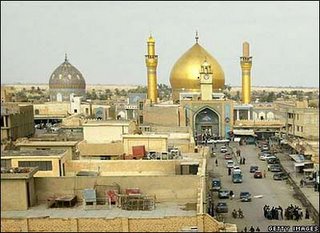
Holy Places
Samarra, sacred tombs of Imam Ali al-Hadi and Imam al-Hasan al-Askari:

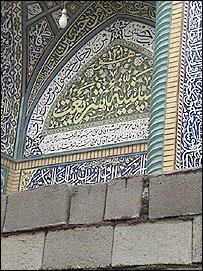
Qom, Hoseynieh of the Sufis:
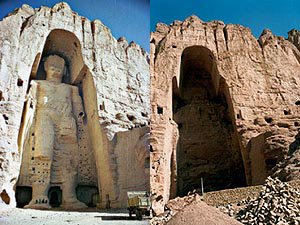
Bamiyan, Statues of the Buddha:
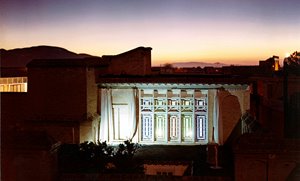
Shiraz, House of the Bab:


Qom, Hoseynieh of the Sufis:

Bamiyan, Statues of the Buddha:

Shiraz, House of the Bab:


Subscribe to:
Posts (Atom)
